Mourners Demand Revenge in Stunning Iran Mourning Videos


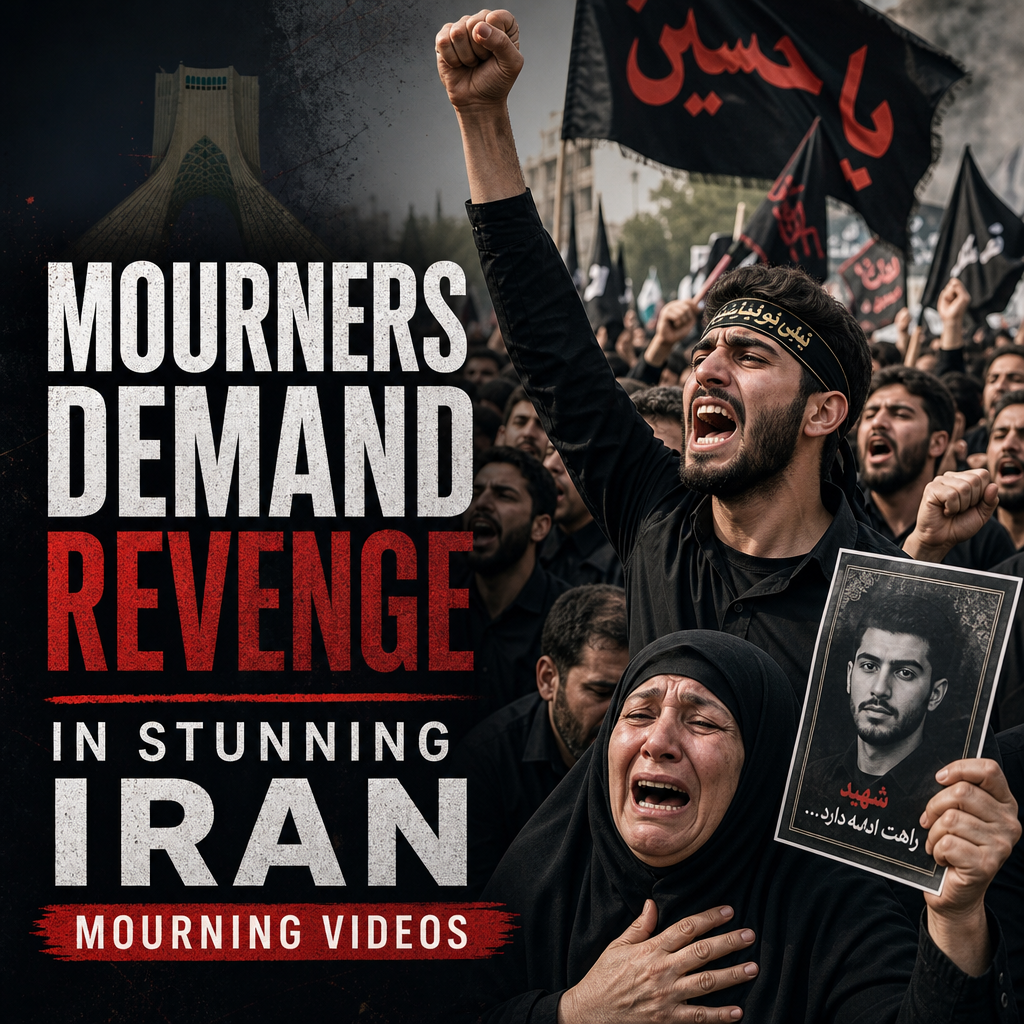
Iran mourning videos have become a striking symbol of how grief, anger, and politics can collide in moments of national trauma. In the footage circulating after the latest high-profile deaths and state funerals in Iran, mourners are not only mourning; many are chanting for retaliation, framing the loss as a call for revenge against external enemies. That emotional response has drawn global attention, but the meaning of those scenes depends heavily on who is watching and what they believe comes next.
The videos show a country in a highly charged state, where public mourning often doubles as a political ritual. In Iran, large funerals for senior figures have historically been used to project unity, signal resolve, and reinforce the state’s message that sacrifices will be answered. But the chants in these clips also reveal something more complicated: real grief can quickly harden into a demand for action, especially when people believe their country has been humiliated or attacked.



Iran mourning videos and the politics of grief
What stands out most in the mourning footage is not just the scale of attendance, but the intensity of the messaging. RT’s coverage leaned heavily into the emotional dimension, emphasizing the defiance expressed by mourners and the sense that the crowd sees revenge as a justified response. That framing fits a broader pattern in which Iranian state-aligned narratives present the nation as under siege and its response as principled resistance rather than escalation.
Al Jazeera, by contrast, tends to place these moments into a wider regional context. Its reporting often asks what such public anger means for diplomacy, proxy conflicts, and the risk of wider war. That approach matters because chants in a funeral procession do not automatically translate into policy, but they do shape the political environment in which leaders operate. When crowds demand revenge, decision-makers may feel pressure to prove strength, even if a more cautious response would better serve national interests.




Sky News and other Western outlets are generally more skeptical of the rhetoric surrounding these scenes. Their focus is less on the symbolism of mourning and more on the consequences: whether the footage signals escalation, how it may be used by Iranian authorities, and what it means for relations with Israel, the United States, and neighboring states. That skepticism is useful, because public rituals in authoritarian or semi-authoritarian systems can be carefully managed. A large, emotional crowd is real, but it can also be politically amplified.
The most responsible reading sits somewhere between these positions. The footage is clearly genuine in the sense that people are visibly angry and distressed. But it is also not enough to assume that every chant reflects a coherent national strategy. Public grief often mixes personal loss, religious identity, anti-foreign sentiment, and government messaging into one highly volatile moment.
Why the chants matter beyond the crowd
There are a few reasons these images resonate so strongly:
– They show how mourning in Iran can become a public expression of resistance, not just private sorrow.
– They create a visual narrative that leaders can use to justify retaliation or hardened policy.
– They influence outside observers, who may interpret the scenes as evidence of imminent escalation.
– They may deepen fears in the region that violence will spread beyond one incident or one border.
That does not mean revenge is inevitable. In many cases, governments use such moments to signal strength while still calibrating their actual response carefully. A loud crowd can serve as a warning to adversaries, a reassurance to domestic audiences, and a bargaining chip in international messaging. In other words, the chants may be less a prediction than a pressure tool.
What these scenes tell us about Iran’s next move
The big question is whether the emotional force seen in the mourning videos will shape policy or simply reflect the mood of the moment. That remains uncertain. Iran’s leadership typically operates on two levels at once: it speaks in the language of resistance and retaliation, while also calculating the risks of direct confrontation. Those calculations matter especially now, given the broader regional tension and the possibility that any retaliatory step could trigger a wider chain reaction.
From a political standpoint, the footage may serve several functions at once. It can unify supporters, project deterrence, and show that the state still commands loyalty in times of crisis. But it also reveals the limits of that control. When revenge becomes the dominant public language, it narrows room for compromise and makes moderation look like weakness.
That tension is why the different news sources matter. RT’s emphasis on resolve captures the mood of defiance. Al Jazeera’s wider regional lens reminds readers that this is part of a much larger web of conflict. Sky News’s more cautious framing highlights the risk that emotion can outpace strategy. Put together, those perspectives suggest a simple but important conclusion: the videos are real, the anger is real, but the political meaning is still unfolding.
The strongest takeaway is not that war is certain, nor that the chants can be dismissed as theater. It is that in moments like these, public mourning becomes a political event with consequences far beyond the cemetery or the square. In Iran, as in many countries under pressure, grief can become a message, and a message can become a threat. Whether it becomes action depends on choices still being made behind closed doors.